Table Of Content

This strategy allowed the researchers to determine whether the acquisition of new signed phrases differed across the three conditions. Figure 8 shows one participant's correct responses during sessions across baseline phases, alternating treatments phases, and extended treatment phases. Approximately 40% of the study records measured success in the given treatment through the assessment or attainment of some level of mastery or criterion for the desired skill or behavior (Grannan & Rehfeldt, 2012; Grow et al., 2011; Toussaint et al., 2016). Because study methods frequently continue until mastery or criterion in order to solidify behaviors and promote better maintenance (Luiselli et al., 2008; McDougale et al., 2020), positive improvements occur organically as subjects attain these desired measures.
Where do I find ABA services?
Finally, in the mixed-age groups, the most commonly studied outcome was language (28%), followed by social/communication (20%) and cognitive (20%). Of these three most studied outcomes, improvement was reported at 61%, 65%, and 62%, respectively. Designs such as ABCABC and ABCBCA can be very useful when a researcher wants to examine the effects of two interventions. These designs provide strong internal validity evidence regarding the effectiveness of the interventions.
Field Report: Promoting Evidence-Based Interventions: The Association for Science in Autism Treatment
In the current review, this was showcased through cognitive and language outcome measures, which found that only 38% and 37% of the comparison records, respectively, reported greater improvement with one method over the other. First, there were some treatment integrity failures that might have affected the results. During baseline, for most sessions, there were no programmed consequences for responding, whereas in one session, programmed consequences were provided (i.e., James’ first baseline session).
Nonparametric statistical tests for single-case systematic and randomized ABAB…AB and alternating treatment ... - ScienceDirect.com
Nonparametric statistical tests for single-case systematic and randomized ABAB…AB and alternating treatment ....
Posted: Wed, 27 Dec 2017 00:58:04 GMT [source]
Predictors of Patient Adaptive Behavior Outcomes
One would expect that responses exposed to extinction would take longer to recondition as compared to previously reinforced responses (Bouton & Swartzentruber 1989). The literature on the effects of instructional history on response acquisition might help clarify these outcomes. Coon and Miguel (2012) found that the procedure that had been used before is likely to result in more efficient acquisition when compared to a never-before-experienced teaching procedure. In contrast, Finkel and Williams (2001) found that textual prompts were effective at teaching intraverbals to one child with ASD, but echoic prompts were not. The authors speculated that the participants may have attended more to the textual prompts because of a history of failure with echoic prompts. Thus, in one study, instructional history facilitated acquisition of new responses, while in another study, it appeared that instructional history may have interfered with acquisition of new responses.
Withdrawal (ABA and ABAB) Designs
(PDF) Statistical analysis for single case data: Draft chapter - ResearchGate
(PDF) Statistical analysis for single case data: Draft chapter.
Posted: Sun, 24 Jan 2016 01:02:07 GMT [source]
Please also list any non-financial associations or interests (personal, professional, political, institutional, religious or other) that a reasonable reader would want to know about in relation to the submitted work. Fig.1,1, the record selection process differed slightly between the two searches spanning 1997–2017 and 2018–2020. This is because the diagnostic criteria for the current manuscript were updated to exclude populations that only contained non-ASD diagnoses, and the removal of records satisfying the new criteria took place at different points for each search. Further details on general data coding, as well as outcome coding for ABA Impact, Comparisons of ABA Techniques, and Between-Groups Comparisons can be found in Appendix 2. Extractions for all three sections can be found in Tables S1, S2, and S3, respectively, in Appendix 3.
Out of the ABA Impact cohort, 41% had some follow-up, 40% had some measure of mastery/criterion, and 31% had some measure of generalization. Among study records that showed improvement within the various outcome measures, use of follow-up measures varied. Records that recorded improvements in cognitive, language, social/communication, and problem behavior outcomes had follow-up measures 47%–59% of the time. Records recording improvement in adaptive behavior and emotional outcomes had follow-up measures 67% and 64% of the time, respectively. Studies reporting improvement in autism symptoms had follow-up measures 100% of the time (see Appendix 5, Table S7).
The Role of SSEDs in Evidence-Based Practice
As such, bidirectional changes are much less likely to be the result of extraneous factors. Nevertheless, the results did not show any evidence of noneffect, and the results would be considered strong evidence in favor of the intervention. The current scoping review was conducted to gather an understanding of the scope of available research regarding the use of ABA as an intervention for children and youth living with NDD/D, and in particular ASD. For the purposes of the current review, ABA will be defined as an intervention informed and developed from behavioral analytic approaches for the treatment of children and youth with ASD. The effect of ABA is defined as the measurable changes in a participant's various outcomes as a result of receiving ABA intervention.
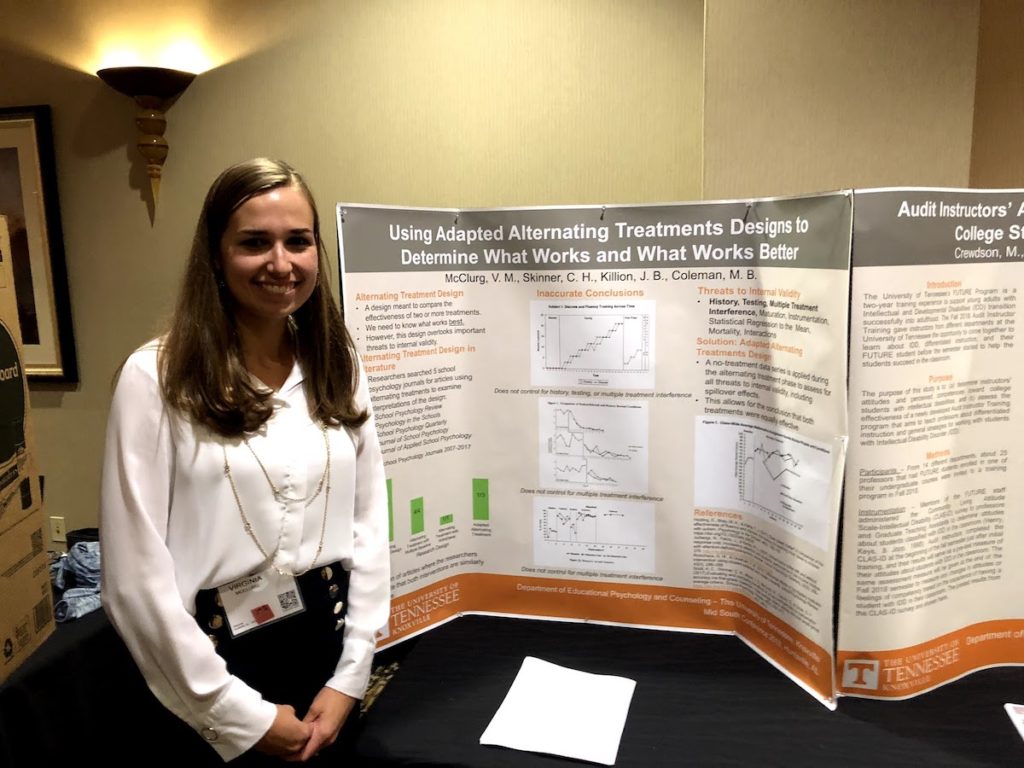
Quantitative Techniques and Graphical Representations for Interpreting Results from Alternating Treatment Design
It is possible that in the current study, the LTM procedure may have interfered with acquisition of responses when the MTL procedure was then used. Traditionally, with behavior analytic instruction, children are taught using a specific prompting procedure, and if they do not demonstrate an increase in correct responding, the teaching procedure is changed. The results of the current study suggest that teaching with an ineffective teaching procedure may hinder learning with a more effective teaching procedure, providing preliminary evidence for the need of prompt-topography and prompt-hierarchy assessments early in intervention.
Multiple-Treatment Designs
This is accomplished by collecting, compiling, and discussing the available data on the most common outcomes and methods. This includes the most common journals of publication, population metrics, and the transferability of this prominent therapy approach to the real world. As such, the objectives of this scoping review are to examine the extent, range, and nature of research activities regarding the impact of ABA on children and youth with ASD and to identify any gaps in the existing literature regarding ABA outcomes and research designs. The ensuing amount of scientific evidence has resulted in ABA being considered a “best practice” and thus endorsed by the governments of Canada and the United States for the treatment of children and youth with ASD (Government of Canada, 2018; U.S. Department of Health & Human Services, 1999). This retrospective, observational study used a random sample of children with ASD (3 to 17 years) who were members of a large integrated healthcare system in Southern California and referred for ABA between January 2016 and November 2018. From the 4145 children referred, a random stratified sample of 334 was selected to extract data from clinical reports over 24 months of services.
Within these comprehensive treatment models, focused intervention practices that are often utilized and independently investigated can include, but are not limited to, DTT and naturalistic teaching strategies such as PRT and functional communication training (FCT). DTT is one of the most fundamental focused intervention practices of ABA and utilizes sequences of instruction and repetition in a distraction free, one-to-one setting (Smith, 2001). These new behaviors encompass any behavior that was not previously performed by the child knowingly or unknowingly (Smith, 2001). Naturalistic teaching forms of ABA have sought to improve the ability to generalize and maintain the positive effects of behavioral interventions while upholding many of the fundamental principles and behaviorism of ABA (Schreibman et al., 2015). One such method of naturalistic teaching is through the focused intervention practice of PRT, developed by Koegel and Koegel (2006), which is focused on improving the self-initiative and motivation of a child to communicate effectively in common real-life settings (Mohammadzaheri et al., 2015). Another focused intervention practice and naturalistic teaching method is FCT, a differential reinforcement-based procedure developed by Carr and Durand (1985) that reduces problem behaviors by replacing them with more appropriate communicative responses.
Therefore, all experimental procedures must be analyzed to ensure that all conditions are identical except for the variable(s) of interest. Presenting conditions in random order can help eliminate issues regarding temporal cycles of behavior as well as ensure that there are equal numbers of sessions for each condition. Single-subject experimental designs (SSEDs) represent an important tool in the development and implementation of evidence-based practice in communication sciences and disorders. The purpose of this article is to review the strategies and tactics of SSEDs and their application in speech-language pathology research. The majority of study records reported improvement across all outcome categories, with 63%–88% of study records reporting improvement across the various outcome measures.
Specific attention can be given to measuring individual changes over time, across differing experimental conditions, in repeated conditions, and with other individuals in order to help establish validity (Perone, 2018). However, this type of study design may not measure statistical significance, lacks generalizability (Tincani & Travers, 2019), and does not assess long-term global effects (Smith, 2012). Although the overall positive results seen across all outcome measures may reflect the individualized impact of ABA, they may not reflect the more global changes or potential impacts on other children or youth with ASD that undergo the same treatment. The results of the current scoping review are consistent with previous review articles and meta-analyses into the overall trend of positive effects of ABA. For example, there were overwhelming positive improvements in the majority of study records with respect to cognition, language development, social skills and communication, and adaptive behavior, along with reductions in problem behavior (Dawson & Bernier, 2013).


No comments:
Post a Comment